Deburr Medical Implants
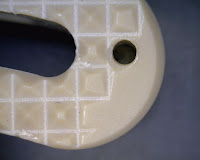
Medical implants made of different types of plastic are great candidates for our deburring process. It is imperative that medical implants have their burrs removed before they are introduced to the human body. Medical device manufacturers creating medical implants know how tedious burr removal is.
I have had the opportunity to spend time in several medical device manufacturing facilities. It seems that almost all of the facilities have several employees deburring parts by hand. These employees will spend eight hours a day removing burrs from parts under a microscope with very fine cutting tools.
In one particular facility, I remember that it would take fifteen minutes to deburr a PEEK medical implant under a microscope. The manufacturer wanted to stream line their burr removal efforts. After running several samples, it was apparent that we could remove the burrs from many parts in just a little longer than it takes a person to deburr one by hand. As a result, efficiency was greatly increased and costs associated with manufacture were reduced.

If you’re a medical implant manufacturer and you are looking to reduce deburring costs while making the process more efficient, then send us an email at info@nitrofreeze.com. We would be happy to help you solve your medical implant burr issues. We will assist you from sampling, to process creation, to production runs, and if need be cryogenic deburring equipment. For more info on the cryogenic deburring process visit our deburring webpage. If you would like more information regarding the deburring process for implants, call us at (800) 739-7949 or email us at info@nitrofreeze.com.
I have had the opportunity to spend time in several medical device manufacturing facilities. It seems that almost all of the facilities have several employees deburring parts by hand. These employees will spend eight hours a day removing burrs from parts under a microscope with very fine cutting tools.
In one particular facility, I remember that it would take fifteen minutes to deburr a PEEK medical implant under a microscope. The manufacturer wanted to stream line their burr removal efforts. After running several samples, it was apparent that we could remove the burrs from many parts in just a little longer than it takes a person to deburr one by hand. As a result, efficiency was greatly increased and costs associated with manufacture were reduced.


If you’re a medical implant manufacturer and you are looking to reduce deburring costs while making the process more efficient, then send us an email at info@nitrofreeze.com. We would be happy to help you solve your medical implant burr issues. We will assist you from sampling, to process creation, to production runs, and if need be cryogenic deburring equipment. For more info on the cryogenic deburring process visit our deburring webpage. If you would like more information regarding the deburring process for implants, call us at (800) 739-7949 or email us at info@nitrofreeze.com.
Labels: cryogenic deburring, deburring, deburring implants, deburring medical implants, deburring medical parts, deburring peek
posted by Ryan Taylor at
10:42 AM
0 Comments


